45.6%Health-worker burnout
In 2022, 45.6% of U.S. health workers reported feeling burned out often or very often, up from 31.9% in 2018. This reflects broad U.S. health-worker evidence, not an addiction-treatment-specific nursing statistic.
Original Research Report
What the evidence says about overnight call coverage, nursing workload, patient safety, and admissions operations in addiction treatment.
Original research and evidence review published by Blueshirt Media
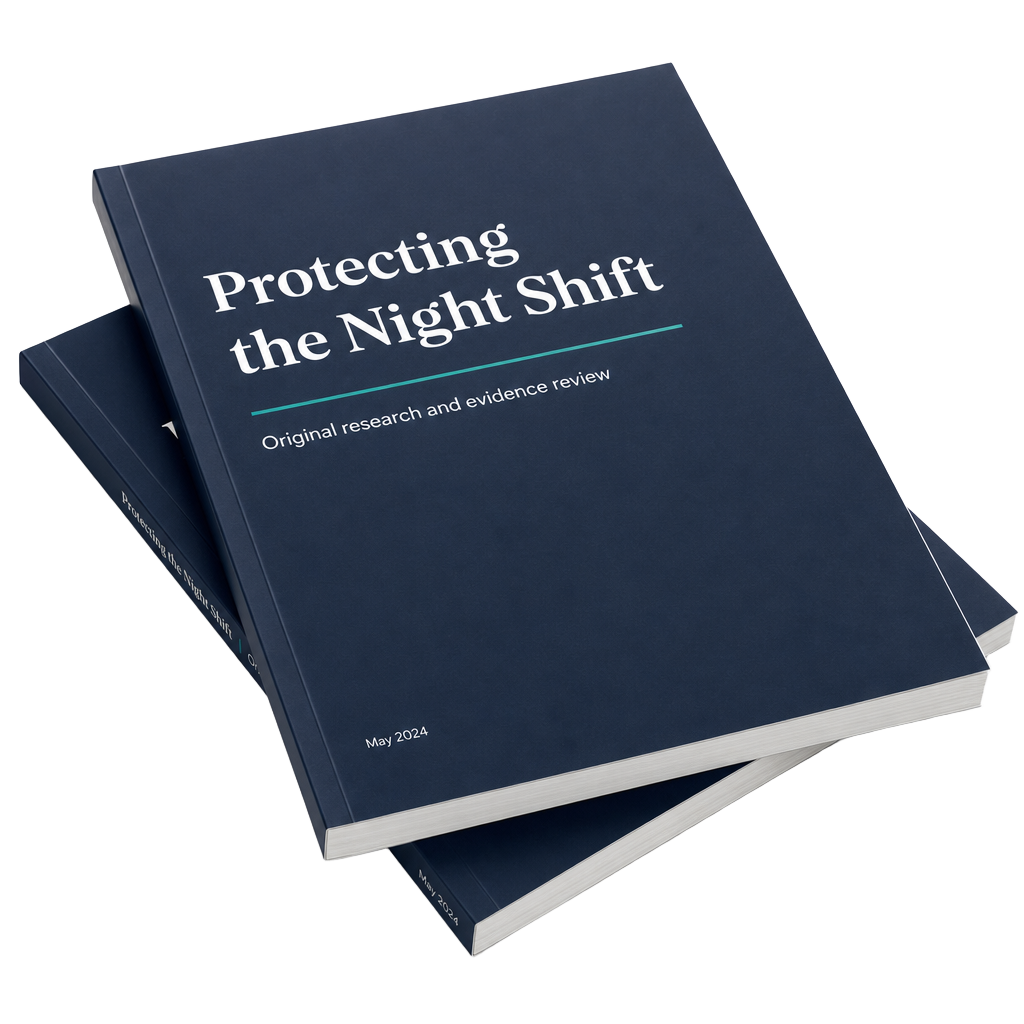
Scope
The report reviews published evidence and operational practice to examine how overnight call handling affects clinical staff, patient safety, and admissions performance in addiction treatment settings.
How overnight nonclinical calls can interrupt nursing workflows
The operational risks created when clinical staff become the default answering service
How treatment organizations can separate clinical escalation from routine admissions and inquiry calls
A practical framework for evaluating overnight call coverage
A 60–90 day pilot model organizations can use to measure the impact
Preview
Findings below are drawn from published, publicly available research. Full context, methodology notes, and limitations appear in the report.
In 2022, 45.6% of U.S. health workers reported feeling burned out often or very often, up from 31.9% in 2018. This reflects broad U.S. health-worker evidence, not an addiction-treatment-specific nursing statistic.
Health workers who reported too few staff had 2.73 times the odds of burnout compared with workers who did not report inadequate staffing. This is cross-sectional U.S. health-worker evidence and is not specific to residential addiction-treatment nursing.
Source: CDC/NIOSH, 2023 — Quality of Worklife Survey analysis (MMWR)
In an observational study of 4,271 medication administrations, each interruption was associated with a 12.7% increase in clinical errors. The study does not attribute these errors to phone calls and was not conducted in addiction treatment; it is evidence that interruptions during safety-critical nursing work matter.
U.S. health workers reporting burnout often or very often. Source: CDC/NIOSH, 2023. Reflects U.S. health workers overall; not specific to addiction-treatment nurses.
Audience
Contents
Request access
Protecting the Night Shift — original research and evidence review.
Credibility
The report reviews publicly available literature and operational practice. Cited sources are referenced for evidence only; citation does not imply review, affiliation, or endorsement of Blueshirt Media by any organization.
Source areas referenced